What Is a Jubilee? Mobile Bay’s Rare Natural Event, Explained
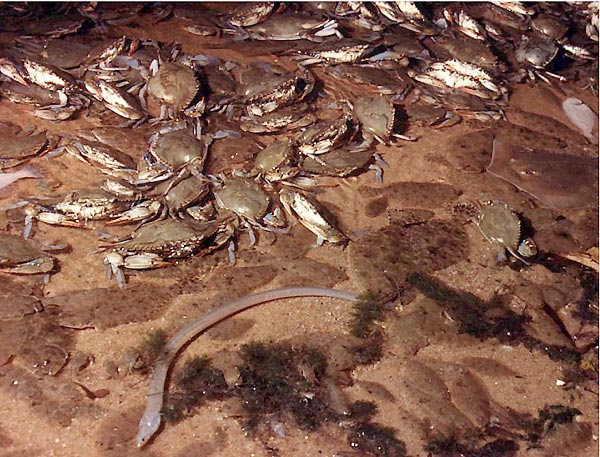
A Mobile Bay jubilee is a rare natural event in which low dissolved oxygen drives bottom-dwelling crabs, flounder, shrimp and other animals into the shallow shoreline. It is not a fish kill. Most animals recover when oxygen returns, according to Alabama Cooperative Extension and the Alabama Department of Conservation and Natural Resources (ADCNR).
Here is how a Fairhope jubilee works, where Eastern Shore events tend to appear, and what official harvest rules say if you see one.
What causes a Mobile Bay jubilee?
Alabama Cooperative Extension’s Jubilee Phenomenon guide (ANR-0834, reviewed June 2021) explains the pattern. In summer, salty Gulf water can sit under lighter river water in deeper pockets of the bay. That layering keeps oxygen from mixing into the bottom. Decaying plant matter feeds microorganisms that use up more oxygen, so the bottom water becomes hypoxic.
A gentle east wind can push surface water away from the Eastern Shore. A rising tide then slides the oxygen-poor bottom water shoreward, herding bottom-dwellers into the shallows. NOAA estuary education materials describe the same mix of hypoxia, easterly wind and rising tide. When sunlight returns and plants start producing oxygen, Extension says the animals usually move back offshore.
Where and when do jubilees happen?
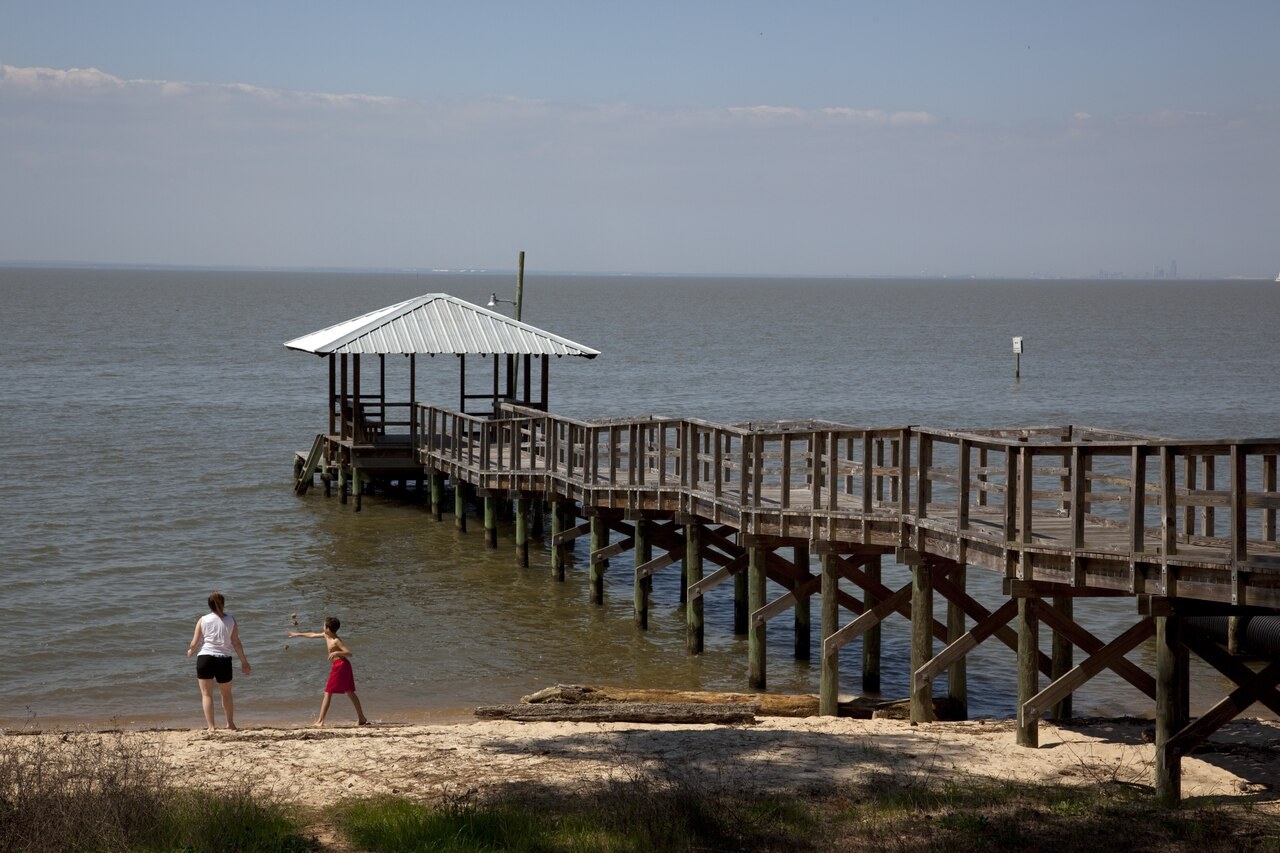
Extension says jubilees happen most often along the upper eastern shore from Great Point Clear to just north of Daphne. They may cover about 15 miles of shoreline from Daphne to Mullet Point, or only a few hundred feet of beach. They occasionally appear farther south of Point Clear and, more rarely, on the western shore. ADCNR’s Outdoor Alabama jubilee article agrees they are most common on the Eastern Shore.
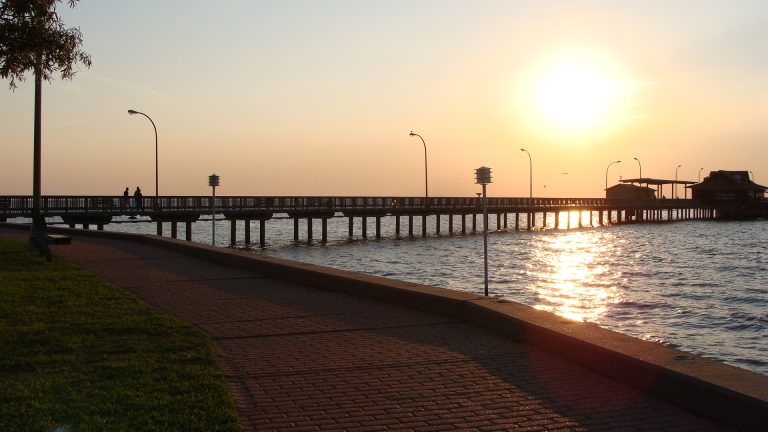
They occur in summer, usually before sunrise, after a cloudy day with a gentle east wind, a calm bay and a rising tide. A falling tide stops the event. NOAA’s guide says they are more frequent from June through September. ADCNR Commissioner Chris Blankenship has said the exact location, time and duration cannot be predicted (April 2025 statement). You can walk the shoreline in our Fairhope beach and bay guide and at the Municipal Pier, but there is no reliable way to schedule a jubilee.
What animals show up?
Extension lists flounder, stingrays, eels, blue crab and shrimp as typical, plus smaller fish such as bay whiffs, hogchokers and juvenile croaker or spot. Outdoor Alabama notes some jubilees feature mostly one species. Animals act oddly while seeking oxygen: crabs may cling to pilings and blow bubbles, flounder may gulp air at the waterline, and eels may burrow into moist sand with their heads out, per Extension.
If a Fairhope jubilee happens: rules to know
There is no free-for-all. Size and bag limits still apply. Outdoor Alabama and Commissioner Blankenship both stress that point.
- Flounder: 5 per person per day, minimum 14 inches total length, and closed Nov. 1–30 every year (Admin. Code 220-3-.30), even during a jubilee.
- Blue crabs: 5-inch minimum carapace width tip to tip (Outdoor Alabama crab rules). Outdoor Alabama’s jubilee guidance also cites a one five-gallon-bucket daily limit; confirm before you keep crabs.
- Shrimp: Outdoor Alabama’s jubilee guidance cites one five-gallon bucket per day with heads on. Check outdooralabama.com for updates.
- License: Blankenship’s April 2025 statement says hand pickup or a handheld net does not require a saltwater fishing license, while size and creel limits still apply. A license is generally required for a cast net or gig. Confirm gear rules on Outdoor Alabama.
Marine Resources Director Scott Bannon has said most animals survive the low-oxygen pulse if left alone. Take only what you will use. For more shoreline ideas, see our beach and bay, pier and things to do in Fairhope guides, or the events calendar.
Mobile Bay jubilee FAQ
A Mobile Bay jubilee is a low-oxygen event that pushes bottom-dwelling crabs, flounder, shrimp and similar animals into shallow shoreline water. It is not a fish kill, and most animals recover when oxygen returns.
Alabama Cooperative Extension says they occur most often along the upper eastern shore from Great Point Clear to just north of Daphne, and they can span about 15 miles or only a few hundred feet of beach. Exact spots are unpredictable.
In summer, usually before sunrise, when warm calm conditions, a gentle east wind and a rising tide line up. NOAA materials say June through September is the most frequent window. Exact timing cannot be predicted.
ADCNR Commissioner Chris Blankenship stated in April 2025 that hand pickup or a handheld net does not require a saltwater fishing license, but size and bag limits still apply. A license is generally required for gear such as a cast net or gig. Confirm current rules at outdooralabama.com.
No. Alabama closes flounder harvest from Nov. 1 through Nov. 30 each year for recreational and commercial fishers, including during a jubilee.
Get the weekend guide
Every Thursday, a short email with the best things happening in Fairhope and Point Clear. Free.
Sources, checked Nov. 5, 2026: Alabama Cooperative Extension The Jubilee Phenomenon (ANR-0834); NOAA jubilee teacher guide; ADCNR / Outdoor Alabama jubilee harvest article, saltwater limits and blue crab regulations; Alabama Admin. Code 220-3-.30; Blankenship–Simpson jubilee statement (April 2025). Confirm rules at outdooralabama.com before you harvest. Questions or corrections? Email hello@aroundfairhope.com.